RNG — Design Through Prototyping
RNG began as an exploration of light as an architectural object rather than a conventional fixture. The design centered on a circular luminous surface capable of producing both a strong graphic presence and an atmospheric wash of colored light into the surrounding space.
The process moved continuously between digital and physical testing. Geometry was developed in 3D, while material properties, emissive intensity, color, and ambient effects were studied through real-time visualization. Those simulations established an initial understanding of how the object might perform, but the design ultimately depended on building it.
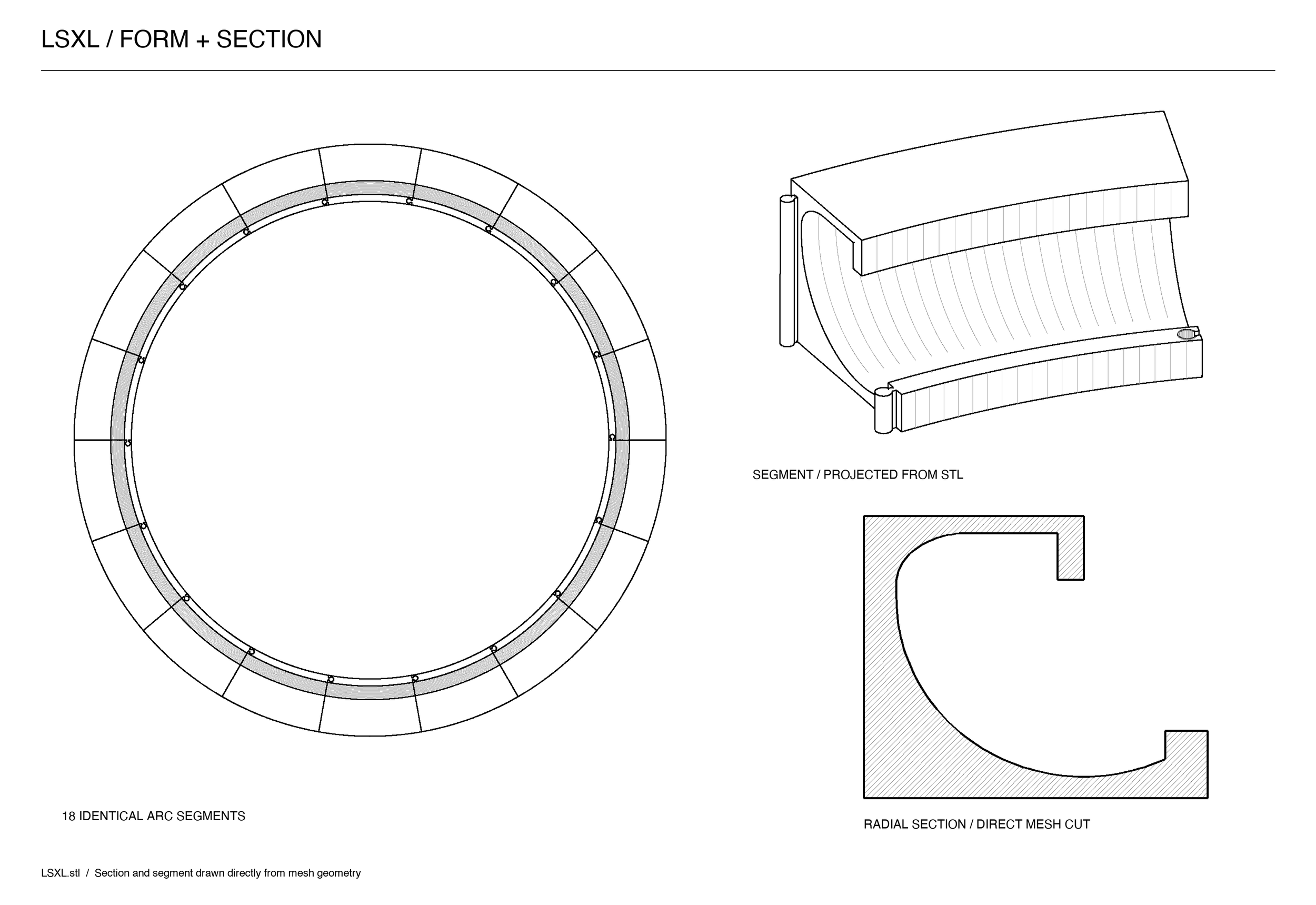
Physical prototypes were fabricated to test the sectional geometry, diffusion, LED placement, edge conditions, assembly, and the relationship between direct and reflected light. Iteration between the digital model and fabricated components allowed the object to be tuned through observation rather than representation alone.
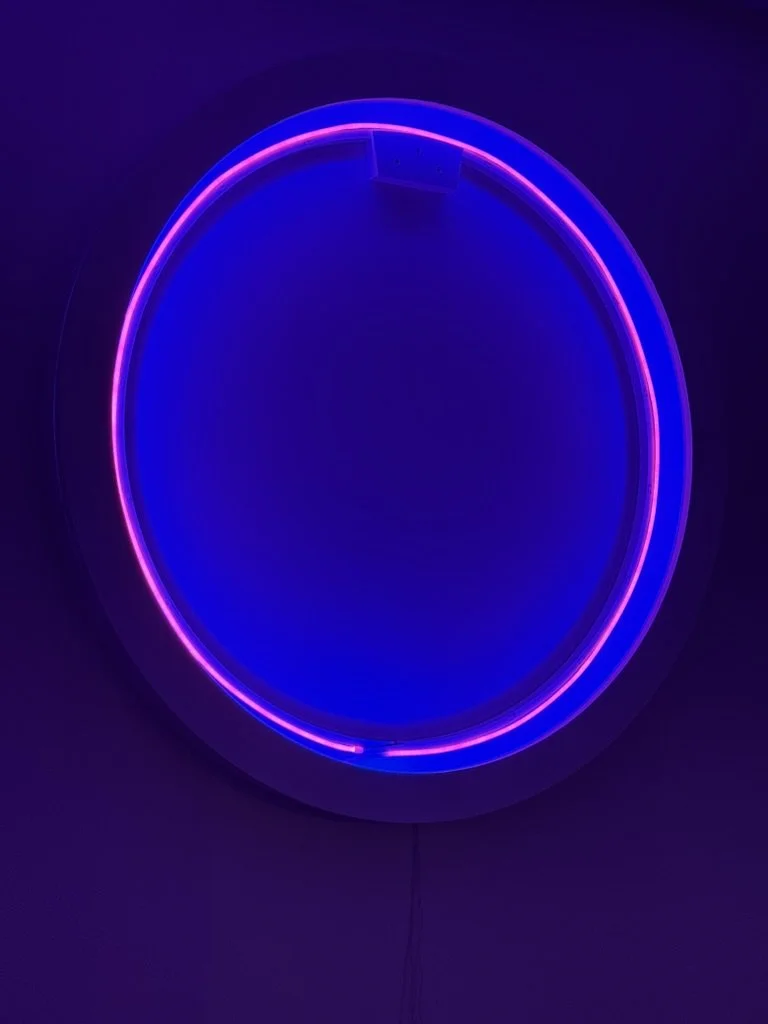
The resulting full-scale prototype transformed those studies into a working luminous object. Programmable color allowed the same geometry to shift dramatically in character—from an intense red field to a saturated blue environment with a contrasting magenta perimeter—demonstrating how a relatively simple architectural form could alter the perception and atmosphere of a room.
RNG is ultimately a study in making: digital visualization → geometric development → fabrication → lighting tests → full-scale prototype. The project demonstrates an iterative design process in which representation is used not simply to communicate an idea, but to test it, build it, and improve it.